
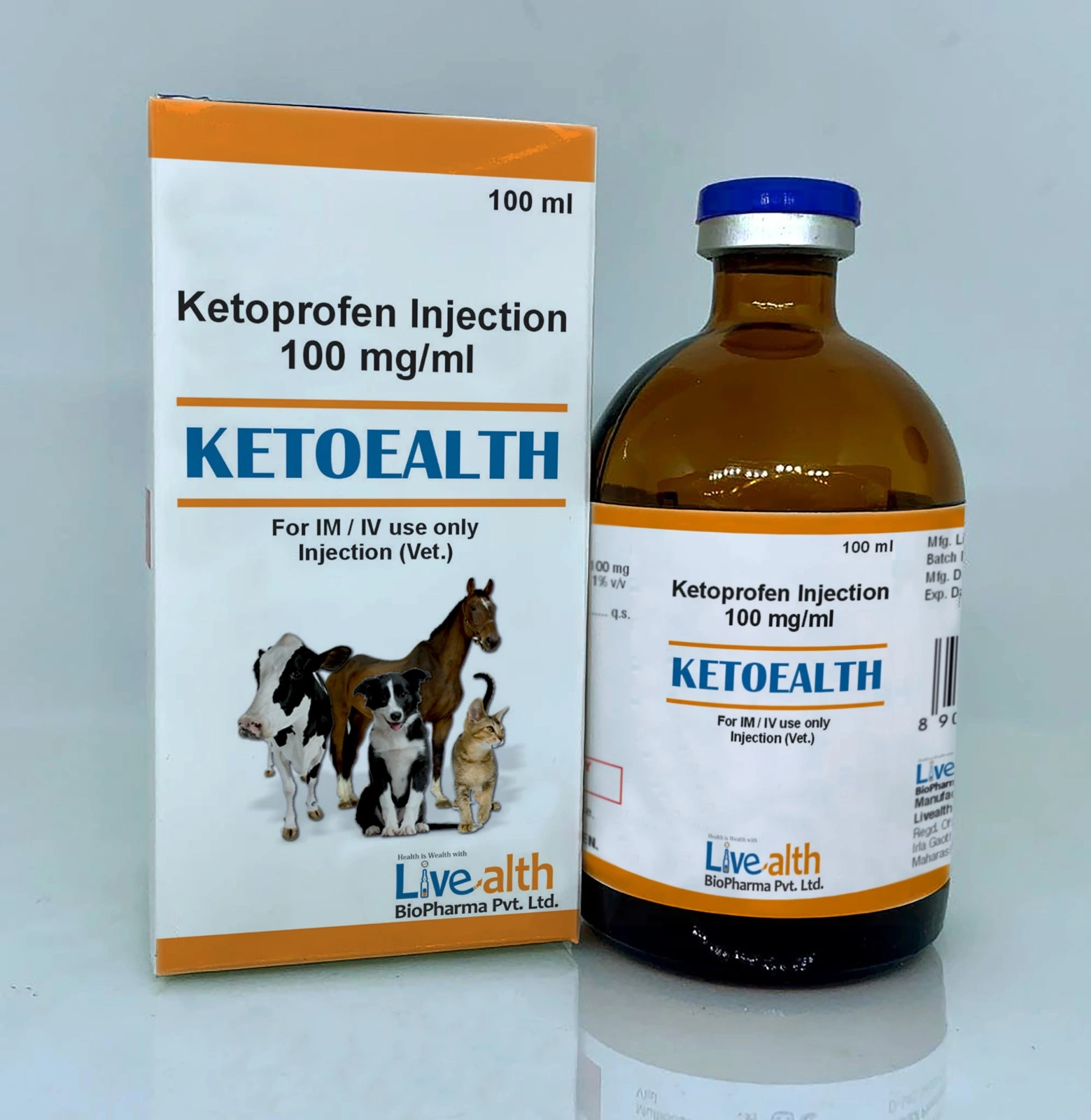


Ketoprofen Injection 100mg – Powerful Advanced Veterinary Pain & Inflammation Support
Ketoprofen Injection 100mg is a non-steroidal anti-inflammatory drug (NSAID) used in veterinary medicine for the management of pain, inflammation and fever in certain animal species. Ketoprofen works primarily by inhibiting cyclooxygenase enzymes involved in the production of prostaglandins, which contribute to pain and inflammation.
Because Ketoprofen Injection 100mg products can have different concentrations, formulations, approved species and regulatory indications depending on the manufacturer and country, the exact product label should always be verified before administration. The 100mg designation alone does not establish the appropriate dose for an individual animal.
What Is Ketoprofen Injection 100mg?
Ketoprofen Injection 100mg is an injectable NSAID formulation containing ketoprofen. It may be used under veterinary supervision when control of pain, inflammation or fever is medically appropriate.
Ketoprofen belongs to the same broad NSAID family as several commonly used veterinary anti-inflammatory medicines, but each medicine has its own dosing, safety profile and approved indications.
Product Overview
| Product Detail | Information |
|---|---|
| Product | Ketoprofen Injection |
| Strength | 100mg — verify whether this refers to total vial content or concentration |
| Drug class | NSAID |
| Active ingredient | Ketoprofen |
| Main actions | Analgesic, anti-inflammatory and antipyretic |
| Species | Depends on product authorization |
| Route | Depends on manufacturer’s label |
| Veterinary guidance | Recommended |
Table of Contents
- What Is Ketoprofen Injection 100mg?
- How Ketoprofen Works
- Ketoprofen for Veterinary Pain and Inflammation
- Common Veterinary Applications
- Ketoprofen Dosage and Administration
- Safety and Precautions
- Ketoprofen and Other NSAIDs
- Food-Animal Considerations
- Competition Animal Considerations
- Storage and Handling
- Where To Buy Ketoprofen Injection 100mg Online
- Frequently Asked Questions
How Ketoprofen Works
Ketoprofen reduces the production of prostaglandins by inhibiting cyclooxygenase enzymes.
Prostaglandins participate in several physiological processes, including pathways associated with:
- Pain
- Inflammation
- Fever
By reducing prostaglandin production, ketoprofen can provide anti-inflammatory, analgesic and antipyretic effects when used appropriately.
However, prostaglandins also perform important protective functions in the gastrointestinal tract, kidneys and other tissues. This is one reason NSAID treatment should be carefully managed by a veterinarian.
Ketoprofen for Veterinary Pain and Inflammation
Depending on the particular product and its regulatory authorization, ketoprofen may be used in veterinary medicine for conditions involving pain, inflammation or fever.
Potential clinical situations can include:
- Musculoskeletal inflammation
- Joint-related pain
- Soft-tissue inflammation
- Postoperative pain
- Fever associated with certain conditions
The appropriate indication depends on the species and product label.
A veterinarian should establish the underlying cause of pain or inflammation before treatment whenever possible.
Common Veterinary Applications
Pain and inflammation can have many different causes.
In horses and other animals, veterinary assessment may be necessary when an animal develops:
- Lameness
- Joint swelling
- Stiffness
- Reduced mobility
- Postoperative discomfort
- Fever
- Reduced appetite
- Behavioral changes
Ketoprofen can help manage clinical signs but does not necessarily eliminate the underlying disease or injury.
Ketoprofen Injection 100mg Dosage and Administration
There is no single dosage that applies to every Ketoprofen Injection 100mg product.
The appropriate dose depends on:
- Species
- Body weight
- Diagnosis
- Product concentration
- Route of administration
- Frequency
- Treatment duration
- Kidney and liver function
- Concurrent medicines
Therefore, the current manufacturer’s label and veterinarian’s instructions should determine the dose.
Do not assume that a 100mg vial means that 100mg should be administered to one animal.
Do not increase the dose or treatment duration without veterinary direction.
Safety and Precautions
NSAIDs can cause adverse effects involving the gastrointestinal tract, kidneys and liver.
Veterinary assessment is especially important before treating animals that are:
- Dehydrated
- Hypovolemic
- Elderly
- Very young
- Pregnant
- Suffering from kidney disease
- Suffering from liver disease
- Suffering from gastrointestinal disease
- Receiving other NSAIDs
- Receiving corticosteroids
Potential warning signs can include:
- Reduced appetite
- Vomiting where applicable
- Diarrhea
- Dark or abnormal feces
- Abdominal discomfort
- Increased thirst
- Changes in urination
- Depression
- Unexpected weakness
If concerning signs develop, discontinue treatment and contact a veterinarian promptly.
Ketoprofen and Other NSAIDs
Ketoprofen should not be casually combined with other NSAIDs.
Examples of NSAIDs that may require particular consideration include:
- Phenylbutazone
- Flunixin meglumine
- Meloxicam
- Firocoxib
- Carprofen
- Aspirin
Corticosteroids can also increase the risk of gastrointestinal adverse effects when combined with NSAIDs.
Always tell the veterinarian about every medicine and supplement the animal is receiving.
Food-Animal Considerations
If Ketoprofen Injection 100mg is being considered for cattle, pigs or another food-producing species, withdrawal requirements are particularly important.
Withdrawal periods can vary according to:
- Product
- Species
- Country
- Route
- Dose
- Regulatory approval
Never assume that the withdrawal period for one ketoprofen product applies to another.
Follow the current approved label and applicable food-safety regulations.
Competition Animal Considerations
For racehorses and other competition animals, check the current medication rules before administering ketoprofen.
An NSAID may be subject to:
- Prohibited-substance rules
- Threshold regulations
- Detection periods
- Withdrawal recommendations
The applicable racing or equestrian authority should be consulted before treatment.
Storage and Handling
Store Ketoprofen Injection 100mg according to the manufacturer’s current instructions.
Before administration, inspect the product for:
- Expiration date
- Damaged packaging
- Broken vial
- Leakage
- Contamination
- Unexpected changes in appearance
Use appropriate sterile injection practices and dispose of needles and other sharps safely.
Where To Buy Ketoprofen Injection 100mg Online
If you are looking to buy Ketoprofen Injection 100mg online, verify the exact formulation before placing an order.
Global Vet Meds provides information for customers researching veterinary medicines and animal-health products.
Before purchasing, confirm:
- Ketoprofen Injection 100mg
- Active ingredient
- Exact concentration
- Manufacturer
- Intended species
- Approved indications
- Administration route
- Expiration date
- Storage requirements
- Prescription requirements
- Withdrawal information where applicable
International customers should also verify the veterinary-pharmaceutical requirements in their country.
Frequently Asked Questions
What is Ketoprofen Injection 100mg?
Ketoprofen Injection 100mg is an injectable NSAID containing ketoprofen. It is used under veterinary supervision to help manage pain, inflammation or fever when indicated by the product label.
What does ketoprofen do?
Ketoprofen inhibits cyclooxygenase enzymes involved in prostaglandin production, providing analgesic, anti-inflammatory and antipyretic effects.
Is ketoprofen an NSAID?
Yes. Ketoprofen belongs to the non-steroidal anti-inflammatory drug class.
What is the dosage of Ketoprofen Injection 100mg?
The dosage varies according to species, body weight, formulation, concentration and indication. The current product label and veterinarian should determine the appropriate dosage.
Can ketoprofen be used with other NSAIDs?
Concurrent NSAID use should be avoided unless specifically directed by a veterinarian. Combining NSAIDs can increase the risk of adverse effects.
Can ketoprofen be used in horses?
Some ketoprofen products have veterinary applications in horses, but approved uses and formulations vary by country. Always confirm the particular product label.
Is Ketoprofen Injection suitable for food-producing animals?
Only where the specific product is authorized for that species and appropriate withdrawal requirements can be followed.
Where can I buy Ketoprofen Injection 100mg?
When purchasing online, verify the manufacturer, formulation, concentration, expiration date, regulatory status and veterinary requirements before ordering.
Ketoprofen 100mg is a non steroidal anti-inflammatory drug (NSAID) and cyclo oxygenase inhibitor. It is a potent analgesic, antipyretic and anti-inflammatory. Ketoprofen is most-commonly prescribed for musculoskeletal pain from soft tissue injury, osteoarthritis or other bone and joint problems. It may be used to reduce or control fevers due to viral or bacterial infections.
Horse Information: Ketoprofen is recommended for the alleviation of inflammation and pain associated with musculoskeletal disorders such as soft tissue injury, synovitis and osteoarthritis in horses. Ketoprofen also may be used in the management of colic for protection from bacterial toxins (endotoxemia); however, flunixin meglumine is used more commonly for this purpose.








Reviews
There are no reviews yet.