
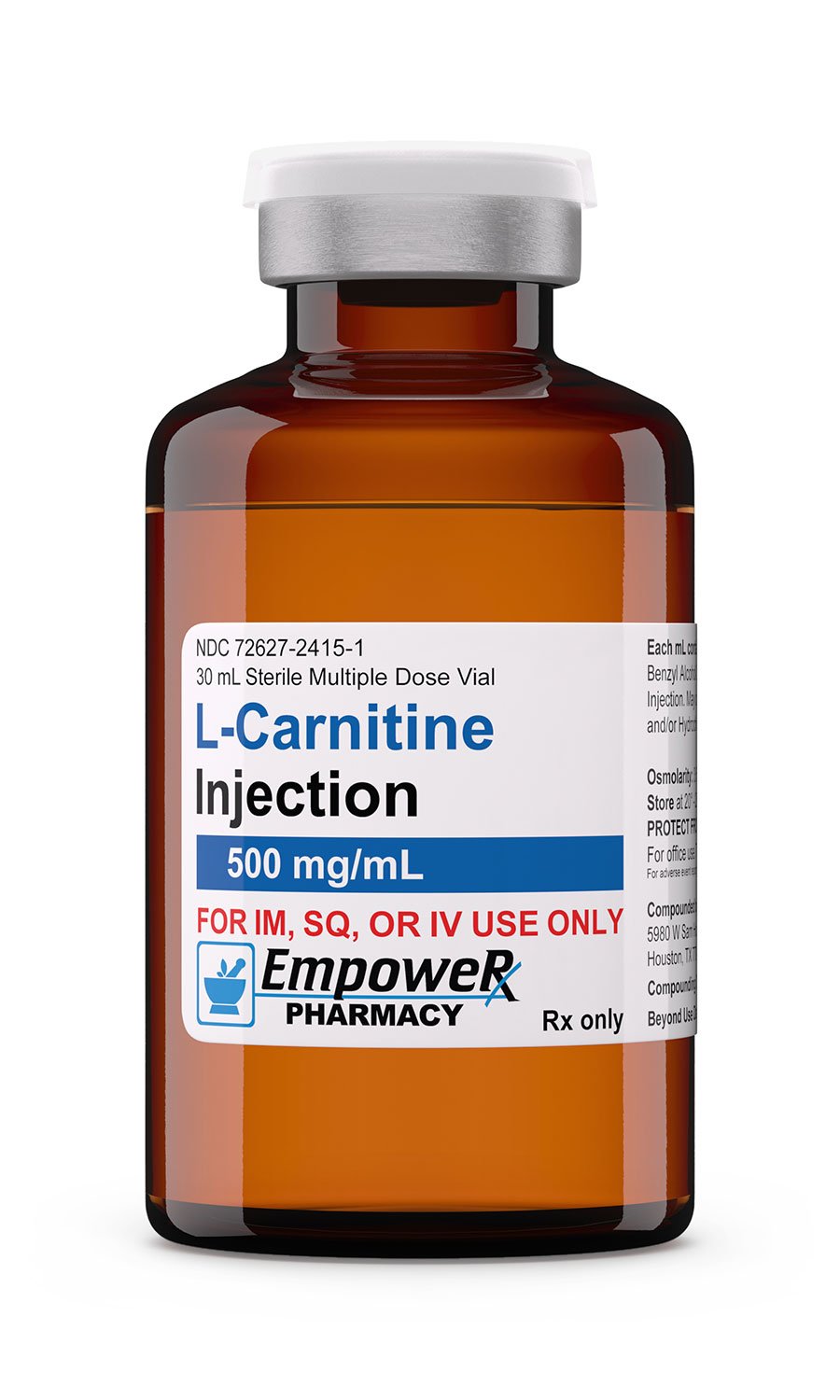
L-Carnitine Injection 30mL – Advanced Equine Energy & Nutritional Support
L-Carnitine Injection 30mL is a veterinary nutritional injectable associated with L-carnitine supplementation and energy metabolism. L-carnitine is a naturally occurring compound involved in transporting long-chain fatty acids into mitochondria, where they can be used in energy-producing pathways. For horses, nutritional products containing L-carnitine are commonly marketed for supporting normal energy metabolism, exercise conditioning and muscle function.
Because injectable L-carnitine products can differ considerably in concentration, formulation, manufacturer and regulatory status, the current product label should always be checked before administration. The 30mL presentation identifies the vial volume and does not itself establish a dosage.
What Is L-Carnitine Injection 30mL?
L-Carnitine Injection 30mL is an injectable formulation containing L-carnitine or a related carnitine compound. L-carnitine has an important physiological role in cellular energy metabolism.
In the context of equine nutrition, L-carnitine is often discussed in relation to:
- Fatty-acid metabolism
- Energy production
- Muscle function
- Exercise conditioning
- Nutritional support
- Recovery programs
The exact concentration and additional ingredients vary between products, so the manufacturer’s label should be used to identify the precise formulation.
Product Overview
| Product Detail | Information |
|---|---|
| Product | L-Carnitine Injection |
| Presentation | 30mL |
| Category | Nutritional veterinary injectable |
| Key ingredient | L-carnitine — verify formulation |
| Common application | Nutritional and metabolic support |
| Intended species | Verify product label |
| Route | Follow manufacturer’s instructions |
| Veterinary guidance | Recommended |
Table of Contents
- What Is L-Carnitine Injection 30mL?
- L-Carnitine and Equine Energy Metabolism
- L-Carnitine for Performance Horses
- Muscle and Exercise Support
- Nutritional Management
- L-Carnitine Injection Dosage and Administration
- Safety and Precautions
- Competition Horse Considerations
- Storage and Handling
- Where To Buy L-Carnitine Injection 30mL Online
- Frequently Asked Questions
L-Carnitine and Equine Energy Metabolism
L-carnitine plays a role in the movement of long-chain fatty acids into mitochondria. Mitochondria are cellular structures involved in producing usable energy.
This makes carnitine relevant to discussions about:
- Fat utilization
- Cellular energy production
- Exercise metabolism
- Muscle activity
However, nutritional supplementation should not be viewed as a substitute for a balanced diet or appropriate veterinary care.
A horse’s energy requirements depend on workload, body condition, age, diet and overall health.
L-Carnitine for Performance Horses
Performance horses require carefully managed nutrition because training and competition increase physiological demands.
A comprehensive conditioning program should include:
- Adequate calories
- High-quality forage
- Appropriate protein
- Balanced minerals
- Sufficient water
- Electrolytes when appropriate
- Gradual conditioning
- Adequate rest
- Regular veterinary assessment
L-Carnitine Injection 30mL may be considered as part of a nutritional strategy when appropriate, but it should not be presented as a guaranteed method for increasing speed, stamina or athletic performance.
Muscle and Exercise Support
Muscle function depends on sufficient energy availability, hydration, electrolyte balance, conditioning and recovery.
Signs that a horse may need veterinary assessment rather than simply additional supplementation include:
- Unexpected fatigue
- Persistent poor performance
- Muscle stiffness
- Abnormal gait
- Exercise intolerance
- Weight loss
- Reduced appetite
- Repeated episodes of weakness
These signs can have numerous causes, and an underlying condition should be investigated where appropriate.
Nutritional Management
L-carnitine supplementation works best when considered alongside the horse’s complete nutritional program.
Before introducing an injectable nutritional product, review:
- Current diet.
- Forage quality.
- Calorie intake.
- Mineral balance.
- Hydration.
- Exercise workload.
- Existing supplements.
- Current medications.
- Veterinary history.
This approach helps prevent unnecessary duplication of nutritional ingredients.
L-Carnitine Injection 30mL Dosage and Administration
There is no universal dosage for every L-Carnitine Injection 30mL product because concentrations and formulations can differ.
The correct dosage must be determined from the specific manufacturer’s label and veterinary instructions.
Do not calculate dosage based solely on the 30mL vial size.
Before administration, verify:
- Concentration
- Species
- Body weight
- Route
- Dose
- Frequency
- Treatment duration
- Contraindications
Only use the injection route authorized for the particular product.
Safety and Precautions
Although L-carnitine is a naturally occurring compound, an injectable formulation requires appropriate veterinary handling.
Before use, verify the product’s:
- Manufacturer
- Active ingredients
- Concentration
- Expiration date
- Batch number
- Storage conditions
- Route of administration
- Regulatory status
Tell the veterinarian about all medications and supplements currently being used.
If an animal develops an unexpected reaction following an injection, seek veterinary assistance promptly.
Competition Horse Considerations
If L-Carnitine Injection 30mL is intended for a racehorse or competition horse, check the current rules of the relevant racing or equestrian organization.
A nutritional product should not automatically be assumed to be competition-compliant simply because it is marketed as a supplement.
Review:
- Prohibited-substance rules
- Medication regulations
- Detection requirements
- Withdrawal guidance
- Product ingredients
Storage and Handling
Store L-Carnitine Injection 30mL according to the manufacturer’s current instructions.
Before use, inspect the vial for:
- Damage
- Leakage
- Contamination
- Expiration
- Abnormal appearance
Maintain recommended storage conditions during transportation and storage.
Where To Buy L-Carnitine Injection 30mL Online
If you are looking to buy L-Carnitine Injection 30mL online, verify the exact formulation before ordering.
Global Vet Meds provides product information for customers researching equine veterinary medicines and nutritional products.
Before purchasing, confirm:
- L-Carnitine Injection 30mL
- Active ingredient
- Concentration
- Manufacturer
- Intended species
- Administration route
- Expiration date
- Storage requirements
- Veterinary requirements
- Competition considerations
For international customers, local regulations governing veterinary injectables should also be checked before purchase.
Frequently Asked Questions
What is L-Carnitine Injection 30mL?
L-Carnitine Injection 30mL is an injectable nutritional product containing L-carnitine or a related carnitine compound. It is associated with nutritional and energy-metabolism support.
What does L-carnitine do?
L-carnitine participates in the transport of long-chain fatty acids into mitochondria, where they can contribute to cellular energy production.
Is L-Carnitine Injection used for horses?
Some injectable L-carnitine products are marketed for equine nutritional support. The intended species must be confirmed from the specific manufacturer’s label.
What is the dosage of L-Carnitine Injection 30mL?
The dosage depends on the product’s concentration, formulation, intended species and approved instructions. A veterinarian should determine the appropriate dose.
Can L-carnitine improve horse performance?
L-carnitine is involved in energy metabolism, but supplementation should not be considered a guaranteed performance enhancer. Conditioning, nutrition, hydration, recovery and overall health remain fundamental.
Can competition horses receive L-carnitine?
Check the current rules of the relevant competition organization and review the complete ingredient list before administering any product to a competition horse.
Where can I buy L-Carnitine Injection 30mL?
When purchasing online, verify the manufacturer, concentration, expiration date, formulation, storage requirements and applicable veterinary regulations.
L-carnitine Injection is synthesized in the liver from the amino acids methionine and lysine. This naturally occurring substance is found in all mammalian tissues, especially striated muscle, and is required in energy metabolism, such as the oxidation of fatty acids, facilitating the aerobic metabolism of carbohydrates, and enhancing the excretion of certain organic acids. While only the L isomer is present in the biologic system, commercial synthesis of carnitine produces a D, mixture, from which the L-isomer is obtained. The D-isomer has pharmacologic effects but does not participate in lipid metabolism. Commercially, carnitine is available as both a prescription and non-prescription product. The prescription version is levocarnitine, while most dietary supplements contain D, L which is commonly sold in health food stores.
Levocarnitine has been used in the treatment of primary and secondary carnitine deficiency in adults and neonates, Alzheimer’s disease, dilated cardiomyopathy in adults and children, valproic acid-induced hepatotoxicity in children, and hyperlipoproteinemia. It has been designated an orphan drug for a variety of conditions. Its use in alcohol induced fatty liver, Down’s syndrome, and chronic fatigue syndrome has shown varying results. Some athletes use carnitine supplements to increase exercise performance, however, the concept of carnitine loading does not appear to be very effective.1 Further, D, competitively inhibits levocarnitine. This inhibition may lead to a deficiency. Prescription forms of levocarnitine were approved by the FDA in 1985 (tablets), 1986 (oral solution), and 1992 (injection)










Reviews
There are no reviews yet.