
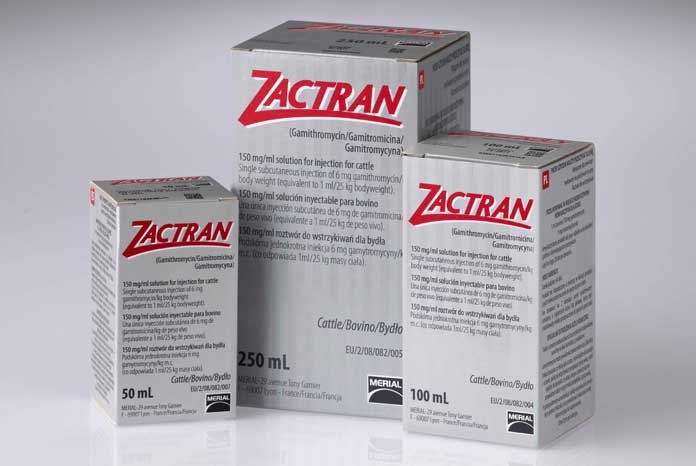


Buy Zactran Injection Online – Zactran Injection For Sale Online
Zactran Injection is a veterinary antimicrobial product containing gamithromycin, a macrolide antibiotic used for specific bacterial respiratory disease indications in approved animal species. It is particularly associated with the management of bovine respiratory disease (BRD) in cattle, with specific product registrations varying according to country and animal species.
Zactran is formulated as a long-acting injectable antibiotic. Its use should be based on an appropriate veterinary assessment and the current product label rather than simply on the presence of respiratory symptoms.
Respiratory disease in cattle and other livestock can involve multiple infectious organisms as well as environmental and management factors. Appropriate treatment therefore works best when combined with good herd-health practices.
What Is Zactran Injection?
Zactran Injection contains gamithromycin, which belongs to the macrolide class of antimicrobial medicines.
It is intended for veterinary use in approved food-producing animal species and is commonly associated with bacterial respiratory disease management.
The exact:
- Approved species
- Indications
- Concentration
- Dosage
- Route
- Withdrawal period
- Age restrictions
can vary according to local registration.
Always check the current product label applicable to your country.
Zactran Injection for Cattle
Zactran Injection is widely used in veterinary respiratory disease programs for cattle where gamithromycin is an appropriate antimicrobial choice.
Bovine respiratory disease can affect cattle of different ages and production systems.
Risk factors can include:
- Transportation
- Weaning
- Commingling
- Crowding
- Weather changes
- Poor ventilation
- Nutritional stress
- Other infections
- Handling stress
A comprehensive disease-control program should address these risk factors as well as treatment.
Signs of Respiratory Disease in Cattle
Signs may include:
- Coughing
- Nasal discharge
- Increased breathing effort
- Fever
- Depression
- Reduced appetite
- Reduced feed intake
- Reduced growth
- Reduced activity
These signs do not necessarily prove that a bacterial infection is present.
Veterinary evaluation can help determine whether antimicrobial treatment is appropriate.
Zactran Injection for Bovine Respiratory Disease
Bovine respiratory disease is often complex and can involve interactions between infectious organisms, animal immunity and environmental stress.
Good management may include:
- Vaccination
- Adequate nutrition
- Appropriate ventilation
- Reduced overcrowding
- Biosecurity
- Stress reduction
- Careful transportation
- Early disease detection
Zactran Injection can form part of an appropriate veterinary treatment strategy when susceptible bacterial infection is suspected or diagnosed and gamithromycin is an appropriate choice.
How Gamithromycin Works
Gamithromycin is a macrolide antimicrobial.
Macrolides work by interfering with bacterial protein synthesis. This limits the ability of susceptible bacteria to grow and reproduce.
Because antibiotics target bacteria, Zactran should not be regarded as a treatment for viral infections.
Respiratory disease may involve both viral and bacterial components, which is why veterinary diagnosis and herd-level management are important.
Zactran Injection for Swine
Depending on the country and specific product registration, Zactran Injection formulations may also be approved for certain respiratory disease indications in swine.
Always confirm that the exact Zactran Injection product being purchased is approved for the intended species.
Swine respiratory disease can have multiple contributing factors, including:
- Housing
- Ventilation
- Stocking density
- Temperature
- Humidity
- Biosecurity
- Infectious organisms
- Stress
Antibiotic treatment should form part of an appropriate veterinary disease-control program.
Zactran Injection Dosage
The appropriate dosage depends on the exact product, animal species, body weight and approved indication.
The current manufacturer’s label should always be followed.
Do not calculate a dose from a different concentration or assume that dosing instructions for another gamithromycin product are interchangeable.
Veterinary professionals may consider:
- Body weight
- Clinical signs
- Disease severity
- Species
- Product concentration
- Treatment history
- Local regulations
when establishing an appropriate treatment protocol.
Zactran Injection Administration
Zactran Injection is an injectable veterinary product.
The exact administration route should be taken from the current product label.
Correct injection technique is important to reduce the risk of:
- Injection-site reactions
- Tissue injury
- Contamination
- Incorrect dosing
- Treatment failure
Only trained personnel following appropriate veterinary instructions should administer injectable veterinary medicines.
Zactran and Responsible Antibiotic Use
Antibiotic stewardship is an important part of modern livestock production.
Zactran should not be used:
- Without an appropriate veterinary reason
- For conditions where antibiotics are ineffective
- At an incorrect dose
- For longer than recommended
- As a substitute for disease prevention
Unnecessary antimicrobial exposure can contribute to antimicrobial resistance.
Veterinarians may consider disease history, clinical examination, diagnostic testing and local antimicrobial-resistance information when selecting treatment.
Zactran and Antimicrobial Resistance
Antimicrobial resistance can make bacterial infections more difficult to treat.
Responsible use of gamithromycin includes following:
- Veterinary instructions
- Product labeling
- Recommended dose
- Approved treatment duration
- Species restrictions
- Withdrawal requirements
Good herd management can also reduce the overall need for antimicrobial treatment.
Zactran and Herd Health
Respiratory disease prevention should involve more than medication.
Important management factors include:
Vaccination
Appropriate vaccination programs can help reduce the risk and severity of infectious respiratory disease.
Nutrition
Adequate nutrition supports normal immune function and animal development.
Ventilation
Good ventilation helps manage environmental respiratory challenges.
Stocking Density
Avoiding excessive crowding can help reduce disease transmission and stress.
Biosecurity
Biosecurity measures can reduce introduction and spread of infectious organisms.
Early Detection
Monitoring cattle regularly can help identify respiratory disease earlier.
Zactran for Feedlot Cattle
Feedlot cattle can encounter several respiratory-disease risk factors after arrival.
These may include:
- Transportation
- Commingling
- Dietary changes
- Environmental stress
- Exposure to new pathogens
A structured arrival-health program can include vaccination, observation, nutrition and appropriate veterinary treatment.
Where indicated, Zactran may be selected by a veterinarian as part of a respiratory-disease treatment program.
Zactran for Beef Cattle
Beef producers should use Zactran according to the approved indication for their specific product.
When treating beef cattle, producers should maintain records of:
- Animal identification
- Date of treatment
- Product used
- Dose
- Route
- Person administering treatment
- Withdrawal period
Accurate records help support responsible medicine use and food safety.
Zactran Safety
As with other veterinary medicines, Zactran should be used according to the current label.
Before treatment, consider:
- Animal health status
- Previous medication reactions
- Other medications
- Product expiration
- Correct product concentration
- Correct dosage
Animals should be monitored for unexpected reactions following treatment.
If a serious or unexpected reaction occurs, seek veterinary assistance.
Zactran and Other Medicines
Inform the veterinarian about other medicines being administered.
This may include:
- Other antibiotics
- Anti-inflammatory medicines
- Corticosteroids
- Antiparasitic medicines
- Vaccines
- Supplements
- Other injectable products
Do not combine antimicrobial products unless directed by a veterinarian.
Zactran Withdrawal Period
Zactran is used in food-producing animals, making withdrawal compliance especially important.
The withdrawal period can vary according to:
- Country
- Product formulation
- Animal species
- Approved indication
- Regulatory requirements
Always follow the withdrawal period specified on the current local product label.
Never assume that a withdrawal period from another country or similar antibiotic applies to your product.
Zactran for Dairy Cattle
Use in dairy cattle depends on the specific product registration.
Before administration, check whether the product is approved for:
- Lactating dairy cattle
- Non-lactating cattle
- Replacement animals
Where applicable, follow milk withdrawal requirements exactly.
Zactran for Pregnant Animals
The suitability of Zactran during pregnancy depends on the specific approved product information.
Consult the current label and veterinarian before treating pregnant animals.
Zactran Storage
Store Zactran according to the manufacturer’s instructions.
General precautions include:
- Keep the vial properly closed.
- Store at the recommended temperature.
- Avoid contamination.
- Protect from unsuitable environmental conditions.
- Keep away from children.
- Check the expiration date before use.
Zactran for Competition and Production Animals
Zactran is primarily associated with food-animal veterinary treatment rather than equine competition use.
For any animal subject to medication restrictions, confirm the applicable regulations before treatment.
For production animals, withdrawal compliance is essential.
Buying Zactran Injection Online
Customers researching Zactran may search for:
- Buy Zactran Injection Online
- Zactran Injection
- Zactran Gamithromycin Injection
- Zactran Veterinary Antibiotic
- Zactran for Cattle
- Zactran for Beef Cattle
- Zactran for Swine
- Gamithromycin Injection
- Zactran Respiratory Disease Treatment
- Zactran Injectable Antibiotic
When purchasing, verify the exact formulation, package size, manufacturer and approved species.
Frequently Asked Questions
What is Zactran Injection?
Zactran Injection is a veterinary antibiotic containing gamithromycin, a macrolide antimicrobial used for approved bacterial respiratory disease indications.
What is the active ingredient in Zactran?
The active ingredient is gamithromycin.
What class of antibiotic is gamithromycin?
Gamithromycin belongs to the macrolide class of antibiotics.
What is Zactran used for?
Zactran is used for specific bacterial respiratory disease indications in approved animal species, particularly cattle and, depending on local registration, swine.
Can Zactran treat viral infections?
No. Gamithromycin is an antibacterial medicine and does not directly treat viral infections.
Can Zactran be used in cattle?
Yes, where the specific product is approved for cattle and the indication matches the animal’s condition.
Can Zactran be used in swine?
Certain Zactran products are approved for swine in some markets. Always check the specific local product label.
Can Zactran be used in horses?
Do not assume that Zactran is approved for horses. Use only according to the approved species and veterinary directions for the exact product.
What is the Zactran dosage?
Dosage depends on species, body weight, concentration and indication. Follow the current manufacturer’s instructions.
Is Zactran a long-acting antibiotic?
Zactran is formulated as a long-acting injectable gamithromycin product. The duration and dosing schedule should be taken from the current product label.
What is the Zactran withdrawal period?
Withdrawal requirements vary by country, formulation and species. Follow the current local label exactly.
Can Zactran be used with other antibiotics?
Do not combine antibiotics without veterinary direction.
How should Zactran be stored?
Follow the manufacturer’s storage instructions on the product packaging.
Zactran Injection — Global Vet Meds
Zactran Injection is a veterinary antimicrobial containing gamithromycin, a macrolide antibiotic used for specific bacterial respiratory disease indications in approved animal species. It is particularly associated with bovine respiratory disease management and has additional species-specific registrations in certain markets.
Successful respiratory disease management requires more than antimicrobial treatment. Appropriate vaccination, nutrition, ventilation, biosecurity, transportation management, stocking density and early disease recognition can all play important roles in maintaining animal health.
Zactran should be used responsibly and according to the current product label. Antibiotics should not be used for conditions where antibacterial treatment is inappropriate, and unnecessary use can contribute to antimicrobial resistance.
For food-producing animals, withdrawal periods must be followed exactly. Because regulatory requirements differ between countries and formulations, always use the withdrawal information supplied with the applicable product rather than relying on information from another source.
Customers searching for Zactran Injection, Zactran Gamithromycin Injection, Zactran for Cattle, Zactran for Swine, or Gamithromycin Veterinary Injection can find product-focused information through Global Vet Meds.
Zactran is a veterinary antibiotic. Use it only according to the current manufacturer’s instructions and appropriate veterinary guidance.
Zactran 150mg use For use in cattle for therapeutic and preventative treatment of bovine respiratory disease (BRD) associated with Mannheimia haemolytica, Pasteurella multocida and Histophilus somni. The presence of the disease in the herd should be established before preventative treatment.
Zactran 150mg use For use in cattle for therapeutic and preventative treatment of bovine respiratory disease (BRD) associated with Mannheimia haemolytica, Pasteurella multocida and Histophilus somni. The presence of the disease in the herd should be established before preventative treatment
Zactran 150mg/ml solution for injection for cattle.
Presentation
Solution for injection containing gamithromycin 150mg/ml. Also contains monothioglycerol 1mg/ml.
Uses
For use in cattle for therapeutic and preventative treatment of bovine respiratory disease (BRD) associated with Mannheimia haemolytica, Pasteurella multocida and Histophilus somni.
The presence of the disease in the herd should be established before preventative treatment.
Dosage and administration
A single subcutaneous injection of 6 mg gamithromycin/kg bodyweight (equivalent to 1 ml/25 kg bodyweight) in the neck.
For treatment of cattle over 250 kg bodyweight, divide the dose so that no more than 10 ml are injected at one site.
To ensure correct dosage bodyweight should be determined as accurately as possible to avoid underdosing.
Contra-indications, warnings, etc
Keep out of the reach and sight of children.
For animal treatment only
Do not use in case of hypersensitivity to macrolide antibiotics or to any of the excipients.
Cross-resistance may occur with other macrolides. Avoid simultaneous administration of antimicrobials with a similar mode of action such as other macrolides or lincosamides.
Use of the product should be based on susceptibility testing and take into account official and local policies on the use of antimicrobials in farm animals.
During clinical trials transient injection site swellings were observed. Visible injection site swellings may develop in up to 45% of treated animals associated with occasional, slight pain evident for one day. The swellings typically resolve within 3 to 14 days but may persist in some animals for up to 35 days after treatment.
Clinical studies have demonstrated the wide margin of safety for gamithromycin injection in cattle. In a young adult cattle study, gamithromycin was administered by subcutaneous injection at 6, 18 and 30 mg/kg (1, 3 and 5 times the recommended dose) and repeated three times at 0, 5 and 10 days (three times the recommended duration of use). Injection site reactions were noted in a dose-related manner.
Based on laboratory animal data, gamithromycin has not produced any evidence of selective developmental or reproductive effects. The safety of gamithromycin during pregnancy and lactation has not been evaluated in cattle. Use only according to the risk/benefit assessment by the responsible veterinarian.
Operator safety
People with known hypersensitivity to the macrolide class of antibiotics should avoid contact with the product.
Gamithromycin may cause irritation to eyes and/or skin.
Avoid contact with skin or eyes. If eye exposure occurs, flush eyes immediately with clean water. If skin exposure occurs, wash the affected area immediately with clean water.
In case of accidental self-injection, seek medical advice immediately and show the package leaflet or label to the physician.
Wash hands after use.
Withdrawal periods
Meat and offal: 64 days.
Not authorised for use in lactating animals producing milk for human consumption.
Do not use in pregnant cows or heifers, which are intended to produce milk for human consumption, within 2 months of expected parturition.
Pharmaceutical precautions
Keep out of the reach and sight of children.
Do not mix with any other veterinary medicinal product.
This product does not require any special storage conditions.
Once opened, used within 28 days.
Any unused veterinary medicinal product or waste materials derived from such veterinary medicinal product should be disposed of in accordance with local requirements.
Legal category
POM-V
Packaging Quantities
50ml glass and 100ml and 250ml polypropylene bottles







Reviews
There are no reviews yet.